
What Is All Saints’ Day in Peru?
All Saints’ Day in Peru, known locally as Día de Todos los Santos, is celebrated every November 1. Beyond its religious significance, this date offers travelers an opportunity to discover Peru through its local customs, historic places, food, and community traditions.
For visitors in Lima, the holiday can be a good occasion to explore the city’s historic and cultural attractions while experiencing the atmosphere surrounding these dates. Travelers can also use the holiday period to discover destinations beyond the capital, including Cusco, Ica, and other parts of Peru, where local traditions provide a different perspective on the country’s cultural diversity.
Together with All Souls’ Day on November 2, these dates create an interesting period for exploring Peru. For travelers, visiting the country around All Saints’ Day in Peru can combine cultural experiences with sightseeing, gastronomy, and short trips, making it an opportunity to discover more of what Peru has to offer.
When Is All Saints’ Day Celebrated in Peru?
All Saints’ Day in Peru is celebrated every November 1st. It is a significant date in the country’s religious and cultural calendar, when families honor saints and take part in traditions that vary across different regions of Peru.
The celebration is followed by All Souls’ Day on November 2nd, a day dedicated to remembering deceased family members and loved ones. Although these are separate observances, they are closely connected in Peru, and many families participate in traditions throughout both days.
For travelers visiting Peru around this time, November 1st and 2nd can offer an opportunity to experience local customs, traditional foods, religious activities, and family gatherings. The way these dates are observed can differ depending on the destination, with particularly distinctive traditions found in Andean communities.
You might be interested in: 10 Spring break travel plans you need to book this year
How Is All Saints’ Day Celebrated in Peru?
All Saints’ Day in Peru is observed through a combination of religious observance and community life. November 1 is an opportunity for many Peruvians to pause from their daily routines and take part in activities connected to their faith and cultural traditions.
The celebration can look different from one region to another, reflecting Peru’s diverse cultural background. This local character is what makes the holiday particularly interesting for travelers, as the experience can vary depending on the community they visit.
All Saints’ Day Traditions Across Peru
The All Saints’ Day period in Peru is experienced through a variety of customs that bring remembrance into everyday community life. Around November 1 and 2, people gather in cemeteries, honor their loved ones through music and offerings, visit seasonal fairs, and, in some cases, take short trips to experience local traditions in other parts of the country.
Visiting Cemeteries
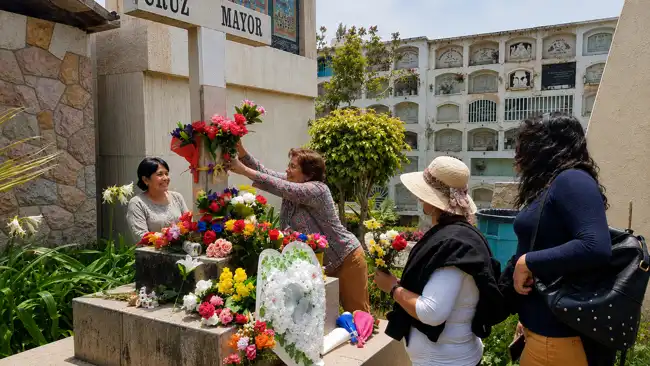
Visiting cemeteries is one of the most visible traditions during this period. In Lima, cemeteries such as El Ángel and Presbítero Maestro can receive many visitors, while Almudena Cemetery in Cusco is an important gathering place during these dates.
Families may clean and decorate graves, bring flowers and candles, and spend time together near the resting places of their loved ones. These visits are an important part of the remembrance traditions observed around All Saints’ Day and All Souls’ Day.
Music and Serenades
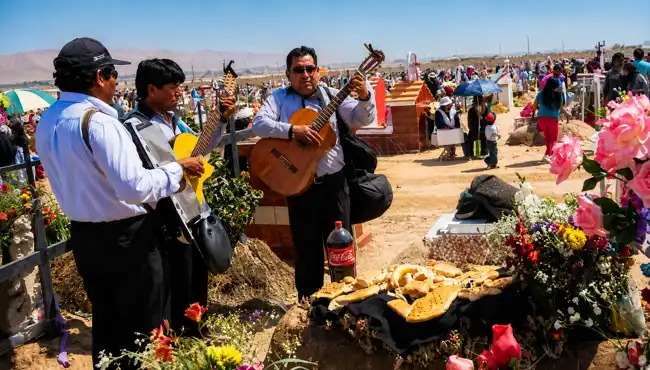
Music can also become part of the way families remember their loved ones. Some people hire trios or local musicians to perform songs that were favorites of deceased family members. These serenades create a personal tribute and add a distinctive atmosphere to cemetery visits.
Offerings and Time Together
Families may bring flowers, candles, food, and drinks to cemeteries during the remembrance period. Sharing these items symbolically alongside a loved one’s grave reflects the importance of maintaining a sense of connection with those who have passed away.
Local Fairs and Markets
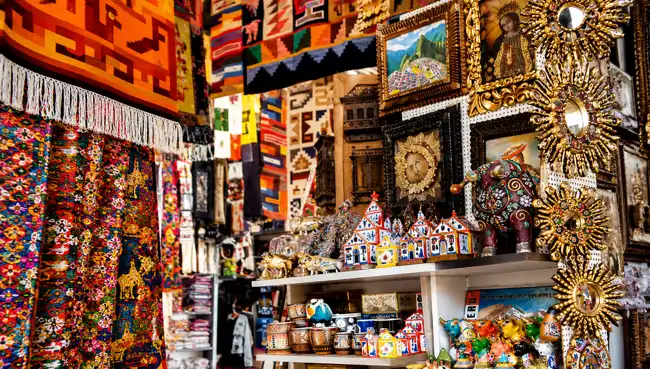
In some cities, temporary fairs and markets appear around main plazas during these dates. Visitors may find traditional sweets, flowers, handicrafts, and other seasonal products, providing an opportunity to observe local customs and discover regional products beyond the main tourist attractions.
Short Trips and Cultural Getaways
The holiday period also gives some Peruvians an opportunity to take short trips to nearby destinations in the coast or highlands. These getaways can combine leisure with cultural tourism, allowing visitors to explore local communities and experience regional customs during one of the country’s important cultural periods.
Together, these traditions show how the All Saints’ Day period extends beyond religious observances. Through visits to cemeteries, music, offerings, local fairs, and travel, Peruvians express remembrance while keeping local customs and community traditions alive.
You might be interested in: 10 Spring break travel plans you need to book this year
Traditional food for All Saints’ Day in Peru
Food plays an important role in Peru’s cultural celebrations, and All Saints’ Day in Peru is no exception. Around November 1 and 2, families prepare and share traditional foods that reflect the culinary identity of their region. While recipes and customs vary from one destination to another, these seasonal foods offer travelers another way to understand Peru’s connection between food, family, and cultural heritage.
T’anta Wawa: A traditional andean bread
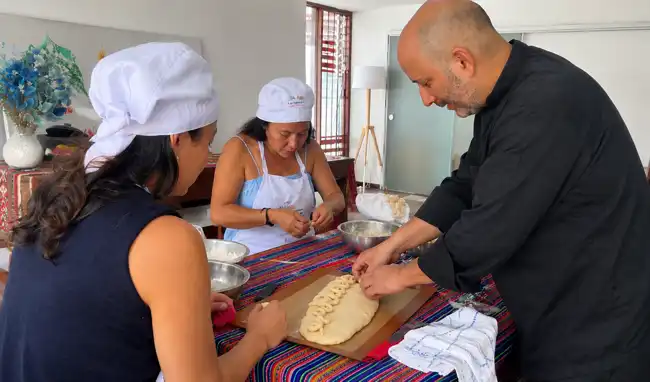
One of the most recognizable foods associated with this season is T’anta Wawa, particularly in Cusco and other Andean regions. This traditional bread is often decorated and shaped like a baby, with colorful details that give each piece its distinctive appearance.
T’anta Wawa is more than a seasonal food. Its preparation and sharing are part of the cultural traditions surrounding this time of year, making it one of the most interesting culinary elements for travelers exploring the Andes during All Saints’ Day.
Regional foods and seasonal flavors
The foods associated with these dates vary across Peru. Depending on the region, travelers may find traditional breads, sweets, local dishes, and family recipes prepared especially for the occasion.
This regional diversity is one of the reasons Peruvian cuisine is so closely connected to travel. Exploring local markets can reveal ingredients, cooking techniques, and products that are difficult to discover through a standard restaurant experience.
You might be interested in: Top 10 festivals in Lima, Peru you can’t miss in 2026
All Saints’ Day vs. All Souls’ Day in Peru
Although All Saints’ Day and All Souls’ Day are celebrated on consecutive days in Peru, they have different religious meanings. Understanding this distinction can help travelers better appreciate the traditions they may encounter during November 1 and 2.
All Saints’ Day – November 1
All Saints’ Day, known in Spanish as Día de Todos los Santos, is celebrated on November 1. The day is traditionally dedicated to honoring saints and is associated with religious observances, family gatherings, and regional cultural traditions.
In Peru, the date also forms part of a broader period of remembrance. Depending on the region, families may prepare traditional foods, attend religious services, and maintain local customs that have been passed down through generations.
All Souls’ Day – November 2
All Souls’ Day, commonly associated with Día de los Difuntos in Peru, takes place on November 2. Its focus is on remembering deceased family members and loved ones.
One of the most visible traditions in many parts of Peru is visiting cemeteries. Families may bring flowers, clean and decorate graves, pray, and spend time together in remembrance. The way these customs are practiced varies significantly between regions and communities.
What Is the Difference?
While both dates are closely connected, their focus and traditions are different. The following comparison highlights the main differences between All Saints’ Day and All Souls’ Day in Peru:
| All Saints’ Day | All Souls’ Day |
| November 1 | November 2 |
| Honors saints | Remembers deceased loved ones |
| Strongly associated with Catholic tradition | Focuses on remembrance and prayers for the deceased |
| Includes religious and regional cultural traditions | Often includes cemetery visits and family remembrance |
| Traditional foods and local customs vary by region | Offerings, flowers, prayers, and gatherings are common in many communities |
Although they have distinct meanings, the two dates are closely connected in Peru. For many families, they form part of the same period of religious observance and remembrance, with traditions that blend Catholic beliefs with local cultural practices.
For travelers, experiencing these dates respectfully can provide valuable insight into the way Peruvian communities maintain their connection with faith, family, and cultural heritage.
You might be interested in: Top 15 nightclubs in Lima: Where to party in 2026
Experience Peruvian Cuisine Beyond All Saints’ Day
The culinary traditions associated with All Saints’ Day in Peru offer just a glimpse into the country’s rich gastronomic heritage. For travelers who want to explore Peruvian food beyond seasonal celebrations, a hands-on culinary experience can provide a deeper understanding of the ingredients, techniques, and traditions that make Peru’s cuisine unique.
Cooking Classes in Lima for Food-Loving Travelers
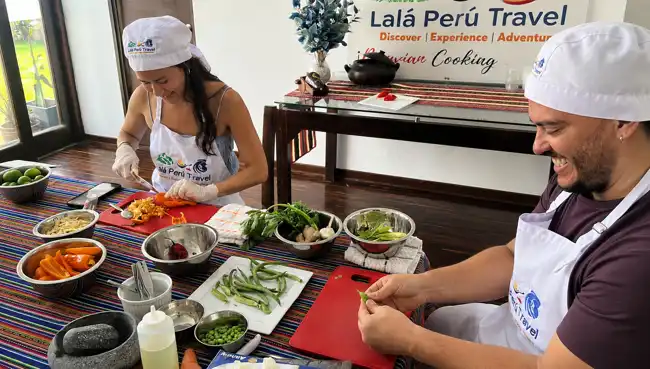
A cooking class in Lima is an opportunity to discover Peruvian cuisine through more than just tasting its dishes. Travelers can visit local markets, learn about native ingredients, and prepare traditional recipes with the guidance of experienced cooks.
A tour of the market and a traditional Peruvian cooking class combine these experiences, introducing visitors to products commonly used in Peruvian cuisine before guiding them in the preparation of traditional dishes. Exploring a local market also offers a closer look at daily life in Lima and the ingredients that shape the country’s diverse culinary traditions.
For those who prefer to focus directly on the kitchen, a Peruvian cooking class offers the opportunity to learn traditional techniques and prepare representative dishes while discovering the cultural background behind the recipes.
These experiences are an excellent complement to a trip centered around All Saints’ Day in Peru, especially for travelers who want to experience Peruvian cuisine beyond simply tasting it. Learning how a dish is prepared creates a more personal and interactive connection with the country’s culinary culture.
Why Explore Peruvian Cuisine Beyond All Saints’ Day?
Peruvian cuisine extends far beyond the foods associated with seasonal celebrations. From native ingredients and traditional cooking techniques to regional recipes passed down through generations, food offers travelers another way to connect with Peru’s cultural diversity.
For visitors traveling around All Saints’ Day in Peru, adding a culinary experience in Lima can complement their cultural itinerary while allowing them to discover a different side of the country through its flavors, ingredients, and cooking traditions.
You might be interested in: Corpus Christi in Cusco 2026: The ultimate visitor’s guide to the festival
Where Can Travelers Experience All Saints’ Day in Peru?
The best place to experience All Saints’ Day in Peru depends on the type of cultural experience a traveler wants to have. Cusco offers a closer connection to Andean traditions, Ica provides an opportunity to discover the celebration within a coastal setting, while Lima combines cultural heritage with history and gastronomy.
Cusco: An Andean Cultural Experience
Cusco is a strong choice for travelers interested in experiencing All Saints’ Day in Peru alongside the cultural traditions of the Andes. The city provides an opportunity to discover local customs, seasonal foods, and the relationship between Catholic practices and the region’s longstanding Andean heritage.
For travelers exploring Cusco and the surrounding area, the period also offers a chance to experience local markets and communities while discovering how cultural traditions continue to form part of everyday life.
Ica: A Coastal Cultural Experience
Ica offers a different perspective on All Saints’ Day in Peru, shaped by the cultural identity of Peru’s southern coast. Travelers interested in exploring traditions beyond the Andes can use this destination as an opportunity to discover local customs, regional food, and community practices within a coastal environment.
Its location also makes Ica an interesting option for travelers looking to combine cultural experiences with a broader exploration of Peru’s coastal landscapes.
Lima: Urban, Historical, and Gastronomic Experiences
Lima provides a more urban way to experience All Saints’ Day in Peru. As the country’s capital, the city brings together cultural influences from different regions and offers travelers access to historic sites, churches, markets, and a diverse gastronomic scene.
Visitors can combine their cultural exploration with experiences such as the Historic Center of Lima and Magic Circuit of Water, while those interested in Peruvian cuisine can complement their visit with a local market tour or cooking class.
Choosing Your Destination
Whether you are interested in Andean culture in Cusco, coastal traditions in Ica, or the historical and gastronomic diversity of Lima, each destination offers a different way to discover Peru during this period. Choosing where to travel can therefore depend on the type of cultural experience you want to include in your trip.