
Cusco has festivals all year, but there are certain days when the city feels completely different. The streets become louder, the Plaza de Armas fills earlier than usual, families arrive from different neighborhoods, and the sound of bands seems to come from every corner. Corpus Christi in Cusco is one of those moments. It is not just a religious date on the calendar; it is a living tradition where faith, history, food, music, and local pride meet in the heart of the city.
Many travelers come to Cusco thinking mainly about Machu Picchu, the Sacred Valley, or the Inca ruins around the city. That is understandable, because the region is full of unforgettable places. But if your visit coincides with Corpus Christi in Cusco, you will see a side of the city that regular sightseeing cannot fully explain. You will watch devotion in motion. You will see communities carrying their saints and virgins with respect, effort, and emotion. You will also notice how locals celebrate with food, conversation, music, and a strong sense of belonging.
This guide is written for travelers who want to understand the festival before arriving, not just take photos without context. Here you will find the meaning of Corpus Christi, when it takes place, what happens during the main days, where to watch the processions, what to eat, and how to enjoy the experience respectfully.
What is Corpus Christi in Cusco?
Corpus Christi is a Catholic celebration dedicated to the presence of Christ in the Eucharist. In many parts of the world, it is marked with masses and religious processions. However, Corpus Christi in Cusco has a personality of its own because it reflects the deep cultural blend that defines the city.
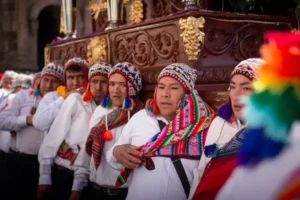
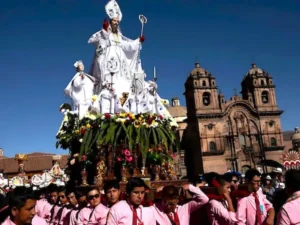
In Cusco, the celebration brings together 15 sacred images of saints and virgins from different parishes. These images are carried through the streets by groups of devotees, accompanied by musicians, dancers, brotherhoods, religious authorities, and families who have inherited this tradition across generations.
What makes Corpus Christi in Cusco so powerful is the way it connects Catholic faith with Andean identity. The celebration arrived during the colonial period, but over time it took on local forms, rhythms, symbols, and customs. Today, it is one of the clearest examples of how Cusco preserves its spiritual memory while continuing to live in the present.
For visitors, the festival is both beautiful and complex. It is colorful, but not simply decorative. It is festive, but also solemn. It is public, but deeply personal for many people who participate. That combination is exactly what makes Corpus Christi is one of the most important cultural experiences in the city.
When is Corpus Christi in Cusco celebrated?
The date changes every year because it follows the Catholic calendar. Corpus Christi is traditionally celebrated after Easter, usually between May and June. For travelers, this detail matters because it means you should always check the official local calendar before booking flights, hotels, or tours.
As a reference, Corpus Christi in Cusco usually includes three important moments:
- The entrance of the saints and virgins into the historic center.
- The main day of the procession around the Plaza de Armas.
- The Octave, when the images return to their parishes after several days in the Cathedral.
In 2026, the entrance was scheduled for June 3, the main day for June 4, and the Octave for June 11. In other years, the exact dates will be different, but the structure of the celebration remains similar.
If you are planning to travel during this season, it is wise to arrive at least one day before the main procession. Corpus Christi is not something you should experience in a rush. The best moments often happen before and after the central ceremony, when neighborhoods gather, musicians rehearse, families meet in the streets, and the city slowly prepares for the celebration.
You might be interested in: Top 20 Lima bars you need to try today
Why Corpus Christi in Cusco is so unique?
There are many religious festivals in Peru, but Corpus Christi in Cusco stands out for its scale, symbolism, and location. The main stage is the historic center, especially the Plaza de Armas and the Cathedral. This matters because Cusco’s main square has been a ceremonial space since long before the Spanish arrival. For centuries, it has been a place of power, ritual, celebration, and public life.
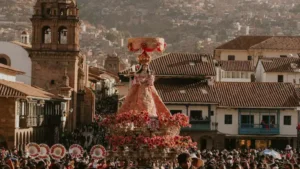
When the saints and virgins enter the Plaza de Armas, the scene feels layered with history. Colonial balconies, church towers, stone streets, and Andean music all become part of the same moment. You are not watching an isolated event; you are watching a city speak through tradition.
Another unique aspect of Corpus Christi in Cusco is the participation of different parishes and neighborhoods. Each image has its own community, its own followers, its own style of music, and its own emotional weight. Some people follow a saint because their family has done so for years. Others participate because they belong to a brotherhood or because their neighborhood identity is tied to that image.
This gives the festival a strong local character. Visitors are welcome to observe, but the celebration does not exist only for tourism. Corpus Christi belongs first to the people of Cusco, and understanding that will help you enjoy it with more respect.
The entrance of the saints and virgins
The celebration begins with the arrival of the sacred images from their home churches. This is often called the entrance, and it is one of the most emotional parts of Corpus Christi in Cusco. During this moment, the saints and virgins are carried through traditional streets toward the Cathedral.
The route can include areas such as Santa Clara, San Francisco, Mantas Street, and the streets surrounding the Plaza de Armas. The movement of the images through the city is slow and ceremonial. Bands play, dancers accompany the delegations, and people stop along the streets to watch or join the procession.
For travelers, the entrance is a wonderful opportunity to see the relationship between the neighborhoods and their religious images. The atmosphere is usually less concentrated than the main day, so it may be easier to observe details: embroidered clothing, flower arrangements, silver ornaments, candles, musicians, and the effort of the cargadores who carry the heavy platforms.
If you want to photograph Corpus Christi, the entrance can be one of the best moments. However, photography should always be respectful. Avoid blocking the path, do not push into groups of devotees, and never treat the images as simple tourist props. The people around you are participating in a serious expression of faith.
The main procession in the Plaza de Armas
The central day of Corpus Christi in Cusco is the grand procession around the Plaza de Armas. This is the most expected moment and the one that attracts the largest crowds. The Cathedral becomes the spiritual center of the celebration, and the square fills with locals, visitors, authorities, vendors, musicians, and religious groups.
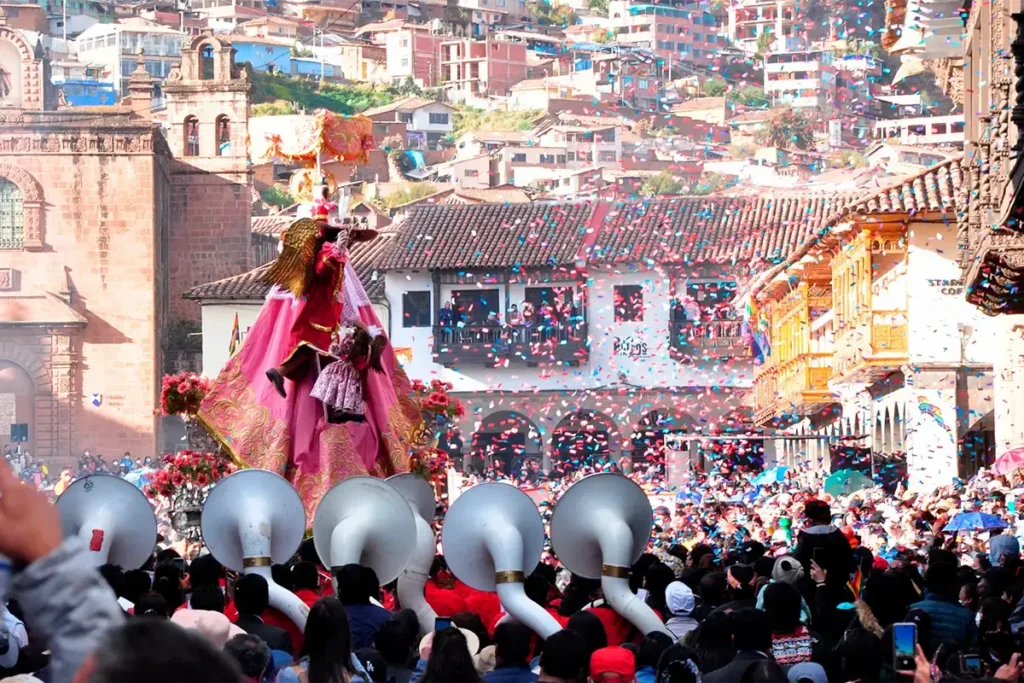
The 15 images leave the Cathedral in a traditional order and are carried around the main square. The procession is not fast. It moves with ceremony, music, pauses, and gestures of reverence. Some images are greeted with special emotion by the crowd, while others are accompanied by particularly large groups of followers.
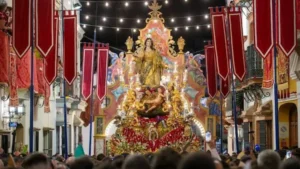
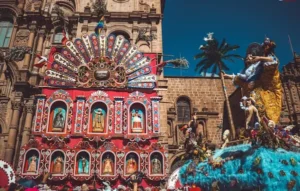
The visual impact is unforgettable. You see richly decorated platforms, religious garments, flowers, candles, banners, and polished metal details shining under the Andean sun. At the same time, the music creates an atmosphere that is both solemn and festive. This contrast is one of the reasons Corpus Christi in Cusco stays in the memory of so many visitors.
If you want a good viewing spot, arrive early. The Plaza de Armas fills quickly, especially near the Cathedral and the portals. Balconies and restaurants around the square may offer good views, but they can also be full or require reservations. Standing in the plaza gives you a closer feeling, while watching from above helps you understand the scale of the procession.
The Octave of Corpus Christi
The Octave is one of the most meaningful parts of Corpus Christi in Cusco, especially for people who want to understand the festival beyond the main event. After the central day, the sacred images remain in the Cathedral for several days. According to local tradition, during that time the saints and virgins “visit” one another and symbolically share what has happened in their communities.
Eight days later, the Octave takes place. The images leave once more in procession before returning to their churches. The atmosphere can feel more intimate than the main day, although it is still important and beautiful. For many locals, the Octave is a farewell, a closing moment filled with gratitude and devotion.
If your itinerary allows it, staying for the Octave gives you a fuller experience of Corpus Christi in Cusco. Many travelers only see the main procession, but the Octave helps you understand the rhythm of the entire celebration. It shows that this is not a one-day show, but a cycle of arrival, gathering, blessing, and return.
You might be interested in: 200 Best family travel quotes to inspire your next
The 15 saints and virgins of the celebration
One of the most fascinating parts of Corpus Christi in Cusco is the presence of 15 religious images from different parishes. Their participation gives the festival its structure and emotional depth. Although names and local references may vary slightly depending on the source or parish tradition, the celebration commonly includes saints and Marian devotions such as:
- San Antonio Abad.
- San Jerónimo.
- San Cristóbal.
- San Sebastián.
- Santa Bárbara.
- Santa Ana.
- Santiago Apóstol.
- San Blas.
- San Pedro.
- San José.
- Virgen de los Remedios.
- Virgen de la Natividad.
- Virgen Purificada.
- Virgen de Belén.
- Virgen Inmaculada Concepción, also known as La Linda.
Each image has its own story and its own group of devotees. Some represent old neighborhoods; others are connected to specific churches, professions, families, or traditions. Their arrival in the historic center is a symbolic gathering of Cusco’s communities.
For a visitor, learning even a little about these images changes the way you see Corpus Christi in Cusco. Instead of watching a single procession, you begin to notice many smaller stories moving together. Each platform has a community behind it. Each song has meaning. Each pause in the route reflects respect, effort, and memory.
Chiriuchu: the traditional dish of the festival
No guide to Corpus Christi in Cusco would be complete without mentioning chiriuchu. This traditional cold dish is one of the culinary symbols of the festival. The name is often associated with the Quechua words for “cold” and “spicy,” and the dish brings together ingredients from different ecological regions of Peru.
A typical plate of chiriuchu may include cuy, chicken, chorizo, chalona or dried meat, cheese, toasted corn, corn tortilla, cochayuyo or seaweed, fish roe, rocoto, and other local ingredients. It may sound unusual if you have never tried it before, but that is part of its importance. Chiriuchu is not just food; it is a representation of exchange between regions, products, and traditions.
During Corpus Christi in Cusco, food fairs and local vendors often offer chiriuchu near the center. For many families, eating this dish is part of the celebration. It is common to see people sharing plates, talking in groups, and taking a break from the procession to enjoy the flavors of the season.
If you are curious, try it with an open mind. The combination of textures and temperatures may be different from what you expect, but it is one of the most authentic ways to connect with the festival. Corpus Christi in Cusco is not only seen and heard; it is also tasted.
You might be interested in: 25 Best Restaurants in Lima 2026
Best places to watch Corpus Christi in Cusco
Choosing where to stand can change your experience completely. The festival attracts many people, so planning your viewing spot makes a big difference.
Some of the best areas to watch Corpus Christi in Cusco include:
- The Plaza de Armas, especially near the Cathedral.
- The portals around the square, where you can find shade and a wider view.
- Streets near Santa Clara and San Francisco during the entrance.
- Balconies or second-floor cafés overlooking the square.
- Corners along Mantas Street, where processional movement can be easier to observe.
If you want photos, look for a place with good light and enough space to stand without disturbing others. If you want to feel the devotion up close, choose a street-level spot. If you prefer comfort, a balcony may be better, but it is smart to reserve in advance.
Keep in mind that movement through the historic center can be slow during Corpus Christi in Cusco. Some streets may be crowded or temporarily blocked by processions. Wear comfortable shoes, carry water, and be patient. The city moves at the pace of the festival, not at the pace of a normal travel day.
Practical tips for visitors
Corpus Christi in Cusco is a welcoming experience, but it is also a major local event. A little preparation will help you enjoy it more.
Here are useful tips:
- Arrive early to secure a good viewing spot.
- Wear layers, because mornings and evenings in Cusco can be cold while midday can be sunny.
- Protect yourself from the sun with a hat, sunglasses, and sunscreen.
- Carry cash for snacks, drinks, and traditional food.
- Keep your belongings close in crowded areas.
- Avoid standing in the path of processions or dancers.
- Ask before taking close-up photos of people.
- Be respectful during prayers, blessings, and solemn moments.
- Check the official schedule because routes and times can change.
- Book accommodation early if you are visiting during June.
Altitude is another important point. Cusco sits at a high elevation, and some visitors feel tired during their first days. If you arrive just before Corpus Christi in Cusco, give yourself time to acclimatize. Drink water, eat lightly, and avoid overloading your first day with too many activities.
How to experience the festival respectfully
Respect is essential when attending Corpus Christi in Cusco. For locals, the festival is not simply entertainment. It is a public expression of faith, identity, family memory, and community responsibility.
You can show respect in simple ways. Stay behind the lines formed by participants. Do not touch the religious images or platforms. Avoid using flash too close to people’s faces. Do not make jokes about rituals you do not understand. If a mass or blessing is taking place, lower your voice and observe quietly.
It is also important to understand that not every moment needs to be photographed. Sometimes the best way to experience Corpus Christi in Cusco is to put the camera away and simply watch. Listen to the band. Notice how families react when their saint passes. Look at the faces of the cargadores. Pay attention to the older people who have probably attended the festival for decades.
That kind of observation will give you a deeper memory than a rushed photo.
You might be interested in: Top 15 museums in Cusco, Peru in 2026
Combining Corpus Christi with other Cusco experiences
June is one of the most festive months in Cusco. Around the same season, the city celebrates cultural parades, religious events, and the famous Inti Raymi later in the month. This makes Corpus Christi in Cusco a great starting point for a broader cultural itinerary.
If you have several days in the city, consider combining the festival with visits to:
- The Cathedral and the churches around the historic center.
- Qorikancha, one of the most important sacred spaces of the Inca period.
- San Pedro Market, ideal for local food and daily life.
- San Blas, known for artisans, viewpoints, and narrow streets.
- Sacsayhuamán, Qenqo, Puka Pukara, and Tambomachay.
- The Sacred Valley, including Pisac, Ollantaytambo, and Chinchero.
Travelers who want a smoother itinerary may also benefit from working with a reliable Tour operator, especially when festival crowds make transportation and timing more complicated. A local expert can help organize the day without taking away the freedom to explore at your own pace.
Another good option is to combine the celebration with guided Cusco tours that explain the city’s history, architecture, and Andean worldview. Understanding the past of the city makes Corpus Christi in Cusco much more meaningful, because many processions pass through streets and plazas shaped by both Inca and colonial history.
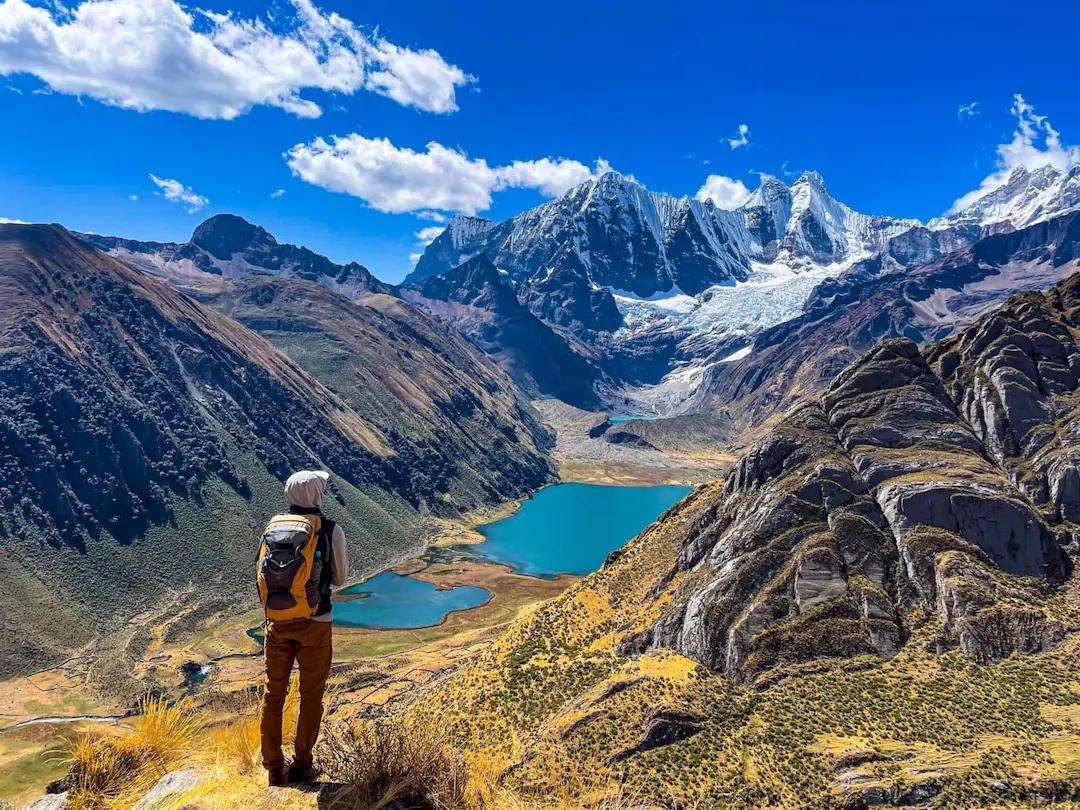
For travelers with more time and a taste for mountain landscapes, the region also offers unforgettable trekking routes. After the festival, some visitors choose experiences such as Ausangate Trek 4 Days to Rainbow Mountain, which connects the cultural energy of Cusco with the high-Andean scenery surrounding the sacred Ausangate mountain.
Suggested itinerary for festival days
If you want to organize your visit around Corpus Christi in Cusco, a simple itinerary can help you enjoy the celebration without feeling overwhelmed.
Day 1: Arrival and acclimatization
Arrive in Cusco and take the day slowly. Walk around the Plaza de Armas, drink plenty of water, and avoid heavy meals if you are still adjusting to the altitude. In the evening, visit a quiet restaurant or café and review the festival schedule.
Day 2: Entrance of the saints and virgins
Spend the morning exploring the historic center. Later, choose a viewing point near Santa Clara, San Francisco, or the streets leading toward the Cathedral. This is a good day for photos, observation, and understanding how the parishes arrive.
Day 3: Main procession
Wake up early and head to the Plaza de Armas. Bring water, sun protection, and patience. Stay for the main procession and take breaks when needed. Afterward, try chiriuchu or another local meal.
Day 4: Cultural visit
Use the day after the main celebration for a relaxed city tour. Visit Qorikancha, San Blas, Sacsayhuamán, or nearby museums. You will understand the festival better after seeing more of Cusco’s historical layers.
Day 5 or later: Octave or onward travel
If you can stay until the Octave, do it. If not, continue toward the Sacred Valley, Machu Picchu, Rainbow Mountain, or another regional experience. Corpus Christi in Cusco can become the cultural heart of a much larger journey.
You might be interested in:Highest Mountains in Peru Guide 2026
Final thoughts
I think the best way to describe Corpus Christi is to say that it makes the city feel fully awake. Cusco is always beautiful, but during this festival it becomes more emotional, more intense, and more connected to its people. The stones, churches, balconies, streets, and plazas seem to carry a different weight when the saints and virgins arrive.
What I like most about Corpus Christi in Cusco is that it does not separate culture from daily life. You see faith, food, music, family, history, and community all happening at the same time. It is formal and popular, solemn and lively, ancient and present. That is why the festival feels so real.
If you are planning a trip to Cusco and your dates match the celebration, give yourself time to experience it properly. Do not just pass through the Plaza de Armas for a quick photo. Stay for the music. Watch the procession with patience. Try the traditional food. Notice how locals participate. Ask questions respectfully. Let the city show you this side of its identity.
Corpus Christi in Cusco is more than a festival on the calendar. It is one of the clearest ways to understand why Cusco remains one of the most fascinating cultural destinations in Peru.