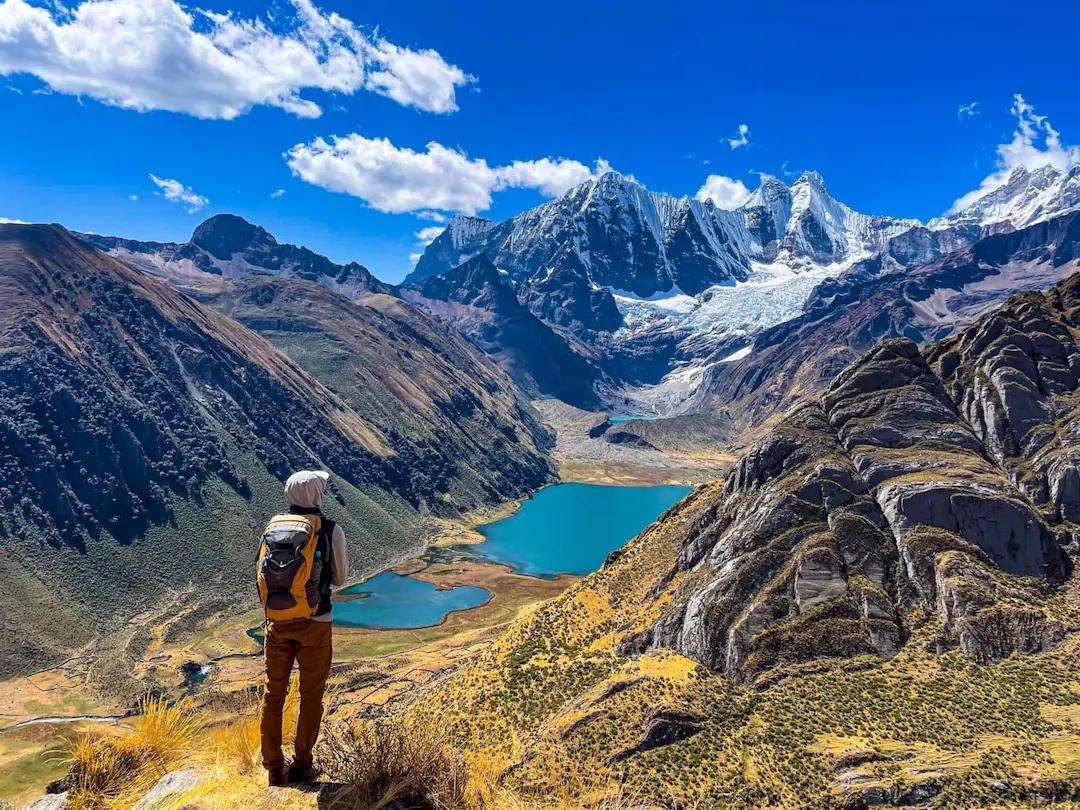

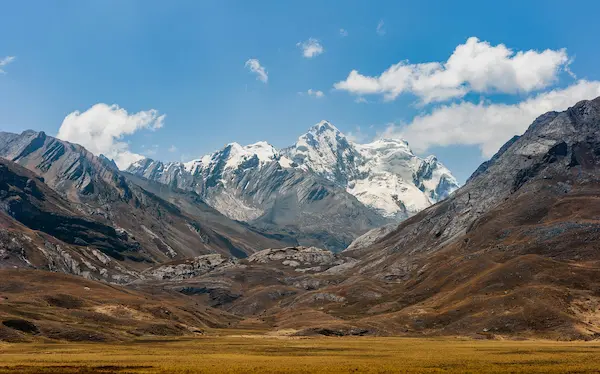
Peru is usually described through Machu Picchu, ancient trails, colorful markets and the energy of Cusco. But anyone who looks beyond the classic postcard soon discovers another side of the country: the immense snow peaks of the Andes. The highest mountains in Peru are not only impressive because of their altitude, but also because of the landscapes, cultures, legends and trekking routes that surround them.
This guide was created for travelers, hikers and mountain lovers who want to understand which peaks dominate the Peruvian Andes in 2026. Some of them are famous among climbers, others are sacred mountains for local communities, and a few are still far from mass tourism. Together, they show why Peru is one of the strongest destinations in South America for adventure travel.
Before starting, it is important to be honest: most of the highest mountains are not casual hikes. Many require technical experience, proper acclimatization, mountain guides and respect for weather conditions. However, you do not need to climb every summit to enjoy them. Several can be admired from trekking routes, high passes, lagoons, viewpoints and nearby villages.
Below you will find the top 15 highest mountains, including their approximate altitude, location, mountain range, travel value and what makes each one special.
Why the highest mountains in Peru are so important
The highest mountains in Peru are part of the Andes, the long mountain system that crosses the country from north to south. These mountains shape the climate, feed rivers, protect glaciers and influence local culture. In many Andean communities, mountains are not seen only as geography. They are considered apus, or sacred protective spirits.
For travelers, the highest mountains offer a mix of adventure and meaning. You can walk near turquoise glacial lakes in Ancash, cross remote valleys in the Cordillera Huayhuash, or explore sacred landscapes around Cusco. Each region has a different feeling, even when the altitude seems similar on paper.
Peru is also home to the Cordillera Blanca, often considered one of the most impressive tropical mountain ranges in the world. This area alone contains many of the highest mountains, plus glaciers, alpine lakes, high-altitude trails and climbing routes known internationally.
If your goal is trekking, photography or mountaineering, understanding these peaks helps you plan better. It also helps you choose routes according to your experience level, budget and time in the country.
You might be interested in: Tourism in Lima Peru
Quick list of the top 15 highest mountains in Peru
Here is a quick reference before going into detail:
- Huascarán Sur: 6,768 m
- Huascarán Norte: 6,655 m
- Yerupajá: 6,617 m
- Coropuna: 6,425 m
- Huandoy: 6,395 m
- Ausangate: 6,372 m
- Huantsán: 6,369 m
- Chopicalqui: 6,345 m
- Siula Grande: 6,344 m
- Chinchey: 6,309 m
- Ampato: 6,288 m
- Palcaraju: 6,274 m
- Salkantay: 6,271 m
- Santa Cruz: 6,241 m
- Copa: 6,188 m
Altitudes may vary slightly depending on the source or measurement method, but this list gives a practical and reliable overview for travelers researching the highest mountains in Peru in 2026.
1. Huascarán Sur: the highest mountain in Peru
Huascarán Sur is the king of the Peruvian Andes. At around 6,768 meters above sea level, it is the highest mountain in Peru and one of the most iconic peaks in South America. It is located in the Cordillera Blanca, in the Ancash region, inside Huascarán National Park.
This mountain has two main summits: Huascarán Sur and Huascarán Norte. The southern summit is the highest point in the country, and for that reason it is always at the top of any serious list of the highest mountains in Peru.
Huascarán is not only important for climbers. It is also a symbol of the Ancash region and a major part of the identity of Huaraz, the main adventure base in northern Peru. From nearby towns and valleys, its massive snow-covered shape dominates the landscape.
Climbing Huascarán requires experience, acclimatization and a professional mountain guide. It involves glacier travel, altitude risk and changing conditions. For most travelers, the best way to experience it is by visiting Huascarán National Park, exploring Llanganuco Lakes, or taking acclimatization hikes around the Cordillera Blanca.
Best for
- Experienced mountaineers
- High-altitude photography
- Travelers visiting Huaraz
- People who want to see the highest point in Peru
2. Huascarán Norte: the northern summit of a giant
Huascarán Norte reaches around 6,655 meters and is part of the same massif as Huascarán Sur. Although it is slightly lower, it remains one of the highest mountains in Peru and a serious mountaineering objective.
Many travelers do not realize that Huascarán is not just one simple peak. Its two summits create an imposing mountain wall that can be seen from several parts of the Callejón de Huaylas. The northern summit has its own character and routes, and it is respected by climbers because conditions can be demanding.
For visitors who are not climbing, Huascarán Norte still adds to the dramatic beauty of the national park. It is one of those mountains that makes the Cordillera Blanca feel enormous. You see it from a distance and immediately understand why the highest mountains in Peru have attracted explorers, photographers and hikers for decades.
Best for
- Advanced climbing expeditions
- Landscape photography
- Travelers exploring the Cordillera Blanca
- Learning about Peru’s glacial geography
3. Yerupajá: the sharp giant of Huayhuash
Yerupajá stands at around 6,617 meters and is the highest mountain in the Cordillera Huayhuash. It is often considered one of the most difficult and beautiful mountains in the country. Its sharp ridges, icy walls and dramatic profile make it unforgettable.
Among the highest mountains in Peru, Yerupajá has a special reputation. It is not as visited as Huascarán, but mountaineers know it well. The mountain looks wild, remote and powerful, especially when seen during the Huayhuash trek.
The Cordillera Huayhuash is one of the best trekking regions in South America. Travelers do not need to climb Yerupajá to appreciate it. In fact, most people experience the mountain from the trekking circuit, where it appears above turquoise lakes, high passes and quiet valleys.
Yerupajá is ideal for travelers looking for a more remote Andean experience. The region is less urban than Huaraz and feels more isolated. That isolation is part of its charm, but it also means planning is important.
Best for
- Huayhuash trekking
- Remote mountain landscapes
- Experienced climbers
- Travelers who prefer less crowded routes
You might be interested in: What to do in Lima Peru for a day
4. Coropuna: Peru’s highest volcano
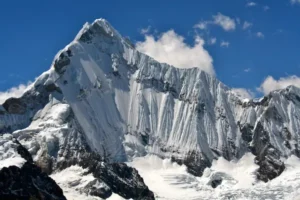
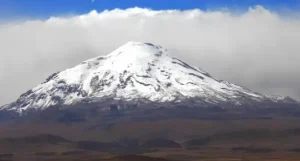
Coropuna rises to about 6,425 meters and is considered the highest volcano in Peru. Located in the Arequipa region, it is different from many of the highest mountains because it belongs to a volcanic landscape rather than the classic glaciated peaks of the Cordillera Blanca.
Coropuna has several summits and a broad, massive appearance. It does not have the same sharp pyramid shape as some northern peaks, but its size is impressive. The mountain has also been important in Andean culture for centuries, with archaeological remains and sacred associations around its slopes.
For travelers in southern Peru, Coropuna offers a different perspective on the Andes. It is less visited than routes near Cusco or Huaraz, which can be attractive for people looking for a quieter expedition. However, its altitude and remoteness still require preparation.
Among the highest mountains, Coropuna is especially interesting because it combines geology, history and high-altitude adventure.
Best for
- Volcano enthusiasts
- Remote expeditions
- Travelers visiting Arequipa
- Cultural and archaeological interest
5. Huandoy: the elegant mountain of the Cordillera Blanca
Huandoy reaches around 6,395 meters and is one of the most beautiful mountains in the Cordillera Blanca. It has several summits and sits near other famous peaks, creating one of the most scenic areas in Ancash.
Huandoy is often admired from the Llanganuco area, where travelers can enjoy views of snow peaks, blue lakes and steep valleys. It is one of the highest mountains in Peru, but it is also one of the most visually elegant. Its shape makes it a favorite for photographers.
Climbing Huandoy is technical and should not be underestimated. For non-climbers, nearby hikes and viewpoints are the best way to enjoy it. Many visitors combine this area with trips to Laguna 69, one of the most famous day hikes near Huaraz.
The mountain’s presence is part of what makes the Cordillera Blanca so special. In a relatively compact area, travelers can see several of the highest mountains without needing to go on a full expedition.
Best for
- Photography
- Treks near Llanganuco
- Experienced mountaineers
- Travelers based in Huaraz
6. Ausangate: the sacred mountain of Cusco
Ausangate, at around 6,372 meters, is the highest mountain in the Cusco region and one of the most sacred mountains in the southern Andes. It belongs to the Cordillera Vilcanota and is deeply connected to local traditions, especially among Quechua communities.
For many travelers, Ausangate is one of the most accessible ways to experience the highest mountains in Peru from Cusco. You do not need to climb the summit to feel its power. The Ausangate trek passes through high passes, colorful lakes, alpaca herds, hot springs and wide open landscapes.
This area is also close to Rainbow Mountain, which has become one of the most visited natural attractions near Cusco. However, the deeper Ausangate region is much more than a day trip. It is a high-altitude world where the weather changes fast and the scenery feels raw and authentic.
Travelers who are short on time often look for routes connected to Ausangate trek 2 days – Rainbow Mountain, especially when they want a compact but intense experience in the Cusco Andes.
Best for
- Trekking from Cusco
- Cultural landscapes
- Sacred mountain experiences
- High-altitude photography
7. Huantsán: a serious peak for serious climbers
Huantsán reaches approximately 6,369 meters and is located in the Cordillera Blanca. It is one of the highest mountains in Peru, but it is also known for being technically demanding.
Unlike some peaks that are popular with guided climbing groups, Huantsán has a more serious reputation. Its walls, weather conditions and routes require skill and preparation. This is not a beginner mountain.
For travelers who are not climbers, Huantsán can still be admired from certain trekking routes and viewpoints around Huaraz. Its presence adds to the dramatic skyline of the Cordillera Blanca, especially for people exploring the eastern side of the range.
Huantsán is a good reminder that altitude is only one part of the story. Some of the highest mountains are difficult not just because they are tall, but because their terrain is complex and their conditions can change quickly.
Best for
- Advanced mountaineers
- Technical climbing interest
- Remote Cordillera Blanca views
- Serious alpine expeditions
You might be interested in: 200 Best family travel quotes to inspire your next
8. Chopicalqui: a classic climbing objective in Ancash
Chopicalqui rises to around 6,345 meters and is often considered one of the more achievable high-altitude climbs in the Cordillera Blanca for experienced climbers with proper support. That does not mean it is easy. It is still a glacier mountain above 6,000 meters.
Among the highest mountains in Peru, Chopicalqui is popular because it offers a strong expedition experience without being as extreme as some other peaks. Many climbers use it as a major goal after acclimatization climbs around Huaraz.
Its location near Huascarán makes the scenery outstanding. Climbers often pass through areas surrounded by some of the best mountain views in the country.
For trekkers, Chopicalqui is another reason to visit the Llanganuco and Huaraz region. Even if you only see it from below, it helps you understand why this part of Peru is considered a paradise for mountain tourism.
Best for
- Guided climbing expeditions
- Acclimatized mountaineers
- Cordillera Blanca itineraries
- Travelers who want a classic 6,000 m peak
9. Siula Grande: famous, remote and dramatic
Siula Grande, at around 6,344 meters, is located in the Cordillera Huayhuash. It became internationally famous because of mountaineering history, but beyond that, it remains one of the most dramatic peaks in Peru.
This mountain is sharp, icy and remote. It is one of the highest mountains in Peru and one of the most respected in the Huayhuash range. Its fame has attracted climbers and adventure travelers, but the region still feels wild compared with more commercial routes.
Most travelers see Siula Grande while trekking the Huayhuash circuit. The views are unforgettable, especially near glacial lakes and high passes. The surrounding landscape feels cinematic: snow peaks, stone slopes, cold wind and deep silence.
Siula Grande is not a mountain for casual climbing, but it is definitely a highlight for people who want to see the strongest side of the Peruvian Andes.
Best for
- Huayhuash circuit trekkers
- Mountain history lovers
- Dramatic landscapes
- Experienced alpine climbers
10. Chinchey: a lesser-known Cordillera Blanca peak
Chinchey, sometimes referred to as Rurichinchay in some sources, reaches around 6,309 meters. It is located in the Cordillera Blanca and is one of the highest mountains in Peru, although it receives less attention than Huascarán, Huandoy or Alpamayo.
That lower level of fame can be a benefit for certain travelers. Chinchey is part of the broader mountain world around Huaraz, where lesser-known peaks still create impressive views and climbing possibilities.
For climbers, the mountain requires preparation and knowledge of local conditions. For hikers, the region around it can provide quieter alternatives to the busiest routes.
Not every mountain on this list needs to be a global icon. Some of the highest mountains are valuable precisely because they remain less commercial, giving the Andes a more authentic and exploratory feeling.
Best for
- Less crowded mountain areas
- Experienced climbers
- Huaraz-based exploration
- Travelers seeking quieter landscapes
11. Ampato: the volcano of history and altitude
Ampato reaches approximately 6,288 meters and is located in southern Peru, near Arequipa. It is one of the highest mountains and also one of the most culturally significant, especially because of archaeological discoveries linked to Inca rituals.
The mountain is a volcano, and its landscape feels very different from the glacier-filled valleys of Ancash. Around Ampato, the terrain is drier, wider and more volcanic. This gives the region a powerful atmosphere, especially for travelers interested in history and geography.
Ampato is often associated with the famous mummy known as Juanita, discovered in the 1990s. This connection gives the mountain a strong cultural dimension. It is not just a high peak; it is part of a story about sacred mountains, offerings and the relationship between Andean people and the natural world.
For travelers exploring Arequipa, Colca Canyon or nearby volcanic landscapes, Ampato adds depth to the journey.
Best for
- Cultural travel
- Volcano landscapes
- Arequipa itineraries
Archaeology and Andean history
You might be interested in: 25 Best Restaurants in Lima 2026
12. Palcaraju: a beautiful peak near Huaraz
Palcaraju stands at around 6,274 meters and is located in the Cordillera Blanca. It is another of the highest mountains in Peru found in the Ancash region, confirming how important this area is for high-altitude adventure.
The mountain has a striking shape and is part of a landscape full of glaciers, lakes and neighboring peaks. While it is not as famous as Huascarán, Palcaraju is appreciated by mountaineers and photographers who know the Cordillera Blanca well.
Travelers visiting Huaraz can include viewpoints and hikes that reveal parts of this mountain environment. As with many peaks in the region, climbing is technical and should be done only with qualified guidance.
Palcaraju is a good example of why Peru deserves more than one mountain trip. The country has so many high peaks that even a mountain above 6,200 meters can feel “less known” compared with the giants around it.
Best for
- Cordillera Blanca photography
- Mountaineering interest
- Huaraz adventure routes
- Travelers who enjoy lesser-known peaks
13. Salkantay: the famous mountain near Machu Picchu
Salkantay, at around 6,271 meters, is one of the most famous mountains in the Cusco region. It belongs to the Cordillera Vilcabamba and is best known for the Salkantay Trek, one of the most popular alternative routes to Machu Picchu.
Among the highest mountains in Peru, Salkantay has a special place because it connects high Andean landscapes with one of the most iconic archaeological destinations in the world. The trek does not climb the summit, but it crosses a high pass with spectacular views of the snow-covered mountain.
Salkantay is powerful, sacred and visually impressive. Its name is often translated or interpreted as something wild or untamed, and that feeling matches the landscape. The mountain rises above valleys, glaciers and cloud forest transitions, making the route varied and memorable.
If you are planning from Cusco, many travelers compare Salkantay with Ausangate, the Inca Trail and other Cusco tours before choosing the best experience for their time and fitness level.
Best for
- Trekking to Machu Picchu
- First-time adventure travelers in Cusco
- Photography
- High Andes and cloud forest landscapes
14. Santa Cruz: a high peak in a legendary trekking area
Santa Cruz reaches around 6,241 meters and is located in the Cordillera Blanca. The name is especially familiar because of the Santa Cruz Trek, one of the most popular multi-day hikes in Peru.
The mountain itself is part of the spectacular scenery that makes this trekking route so famous. Travelers on the Santa Cruz Trek pass through valleys, high passes, rivers and views of snow peaks. It is one of the best ways to experience the highest mountains in Peru without attempting a technical climb.
This route is popular because it offers a strong mountain experience in a manageable itinerary for fit hikers. Of course, altitude still matters, and acclimatization in Huaraz is recommended before starting.
Santa Cruz shows that the highest mountains are not only for elite climbers. With the right route, preparation and support, trekkers can enjoy world-class landscapes safely and meaningfully.
Best for
- Multi-day trekking
- Huaraz itineraries
- Travelers new to high-altitude trekking
- Classic Cordillera Blanca scenery
15. Copa: a classic Cordillera Blanca summit
Copa, at around 6,188 meters, completes this top 15 list of the highest mountains in Peru. It is located in the Cordillera Blanca and is often considered a classic objective for climbers looking for a 6,000-meter experience.
Copa is sometimes described as more approachable than other technical peaks, but it still requires glacier travel, altitude preparation and professional guidance. No 6,000-meter mountain should be treated casually.
For travelers in Ancash, Copa adds one more reason to spend time in the Huaraz region. The area around the mountain offers views of glaciers, valleys and neighboring peaks. It is a strong reminder that the Cordillera Blanca contains an extraordinary concentration of high mountains.
Even though Copa is the last peak in this ranking, it is still higher than almost anything in many other countries. That is the scale of the highest mountains in Peru: even number fifteen is a serious Andean giant.
Best for
- Guided mountaineering
- Acclimatized climbers
- Cordillera Blanca expeditions
- Travelers who want a classic 6,000 m objective
You might be interested in: Top 15 museums in Cusco, Peru in 2026
Best regions to see the highest mountains in Peru
If you want to organize your trip around the highest mountains in Peru, it helps to think by region rather than by individual peak.
Huaraz and the Cordillera Blanca
Huaraz is the most important base for mountain travel in Peru. From here, you can access Huascarán National Park, Laguna 69, the Santa Cruz Trek, climbing routes and many viewpoints. This region contains several of the highest mountains in Peru, including Huascarán, Huandoy, Chopicalqui, Huantsán, Palcaraju, Santa Cruz and Copa.
It is the best choice if your main goal is snow peaks, glacial lakes and classic trekking.
Cordillera Huayhuash
The Huayhuash range is more remote and rugged. It is famous for the Huayhuash circuit, one of the most beautiful treks in the world. Yerupajá and Siula Grande are the main giants here.
This region is ideal for experienced trekkers who want dramatic scenery and fewer crowds.
Cusco region
Cusco is better known for Machu Picchu, but it also has some of the highest mountains in Peru, including Ausangate and Salkantay. The advantage is that travelers can combine culture, trekking and high-altitude landscapes in one trip.
A reliable Tour operator can help choose the right route depending on whether you want a short experience, a multi-day trek or a more challenging mountain itinerary.
Arequipa and southern volcanoes
Arequipa gives access to volcanoes such as Coropuna and Ampato. The scenery is drier and more volcanic, offering a different kind of mountain experience.
This region is great for travelers interested in geology, archaeology and less common expedition routes.
Practical tips before visiting the highest mountains in Peru
The highest mountains in Peru are beautiful, but they also demand respect. Altitude, weather and remoteness can affect even experienced travelers.
Acclimatize before trekking
Do not arrive at altitude and start a hard trek immediately. Spend at least two or three days adapting in places like Huaraz, Cusco or Arequipa, depending on your route. Light walks, hydration and rest can make a big difference.
Choose the right season
The dry season, usually from May to September, is generally the best time for trekking and mountain views. June, July and August are popular because skies are clearer, but nights can be cold. The rainy season can bring clouds, unstable trails and higher risks in certain areas.
Travel with proper support
For technical climbs, always go with certified guides and suitable equipment. For multi-day treks, local agencies can help with logistics, transport, meals, camps and safety planning.
Respect local communities
Many routes pass through community lands. Pay entrance fees when required, follow local rules and avoid leaving trash. The highest mountains are also living cultural landscapes, not just tourist attractions.
Pack for changing weather
Even if the day starts sunny, mountain weather can change fast. Bring layers, rain protection, sunblock, sunglasses, gloves and a warm jacket. At high altitude, the sun can be strong and the nights can be freezing.
You might be interested in:Highest Mountains in Peru Guide 2026
Which mountain should you visit first?
If you are new to Peru, start with what matches your experience. You do not need to climb one of the highest mountains in Peru to enjoy them.
For first-time visitors, Huaraz is excellent because it offers many day hikes and acclimatization options. Laguna 69, Llanganuco Lakes and the Santa Cruz Trek are great ways to experience the Cordillera Blanca.
If you are staying in Cusco, Salkantay and Ausangate are strong choices. Salkantay is ideal if you want to connect trekking with Machu Picchu. Ausangate is better if you want a wilder, more open high-altitude landscape.
If you want something less crowded, consider the Huayhuash region. It is more demanding, but the views of Yerupajá and Siula Grande are unforgettable.
For travelers interested in volcanoes and history, Arequipa’s mountain region offers a different perspective through Coropuna and Ampato.
The best choice depends on your fitness, time, budget and comfort with altitude. The highest mountains are diverse enough that there is no single “perfect” route for everyone.
Final thoughts on the highest mountains in Peru
The highest mountains in Peru are more than a ranking of altitudes. They are places where nature, culture and adventure meet. Some are sacred. Some are technical. Some are best admired from a trail, a lake or a quiet valley at sunrise.
What makes Peru special is that these mountains are not isolated from the travel experience. They are connected to villages, ancient beliefs, trekking routes, national parks and local guides who know the land deeply. You can visit Huaraz for the Cordillera Blanca, explore the remote beauty of Huayhuash, walk near Ausangate from Cusco, or discover the volcanic landscapes of Arequipa.
If you are planning a trip in 2026, use this guide as a starting point. Choose carefully, acclimatize well and respect the mountain environment. You do not have to stand on a summit to feel the power of the Andes. Sometimes, seeing one of these snow peaks from a trail is enough to understand why the highest mountains continue to inspire travelers from all over the world.