
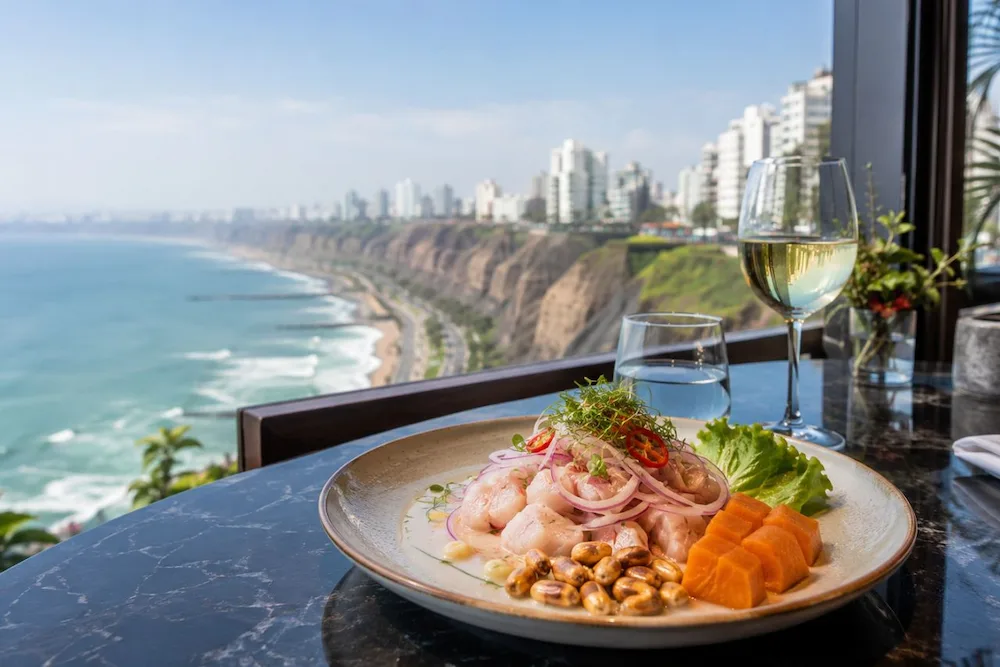
Lima is one of the best destinations to experience Peruvian cuisine, thanks to its variety of traditional recipes, fresh ingredients, and cultural influences. The city’s food scene brings together seafood from the Pacific coast, native potatoes from the Andes, local spices, and cooking techniques that have been passed down through generations. From small neighborhood restaurants to traditional markets, there are many places where visitors can discover the flavors that make Peruvian gastronomy so distinctive.
If you are planning a trip to the Peruvian capital, trying some Peruvian Dishes should be part of your travel experience. Whether you enjoy fresh seafood, grilled meats, creamy sauces, or traditional desserts, Lima offers options for different tastes. Some recipes are closely connected to the country’s history, while others reflect the influence of different cultures on local cooking. Here are eight traditional preparations worth including in your food itinerary.
Seafood dishes influenced by Lima’s coastal location
Lima’s location along the Pacific Ocean has strongly influenced its culinary traditions, especially the way seafood is prepared and served. The city’s proximity to the coast provides access to a variety of fish and shellfish that are used in many traditional Peruvian dishes. Ingredients such as lime juice, red onion, fresh herbs, and Peruvian chili peppers are also essential because they add acidity, freshness, and flavor to these preparations.
Seafood is an important part of everyday food culture in Lima. It can be found in traditional cevicherías, local markets, and restaurants that specialize in coastal cuisine. Some dishes are served cold and are especially refreshing, while others combine seafood with sauces, vegetables, or rice to create more filling meals. For travelers, trying these preparations is a good way to experience how the ingredients from the Pacific coast have shaped Peruvian cuisine.
Ceviche: A traditional Peruvian seafood dish
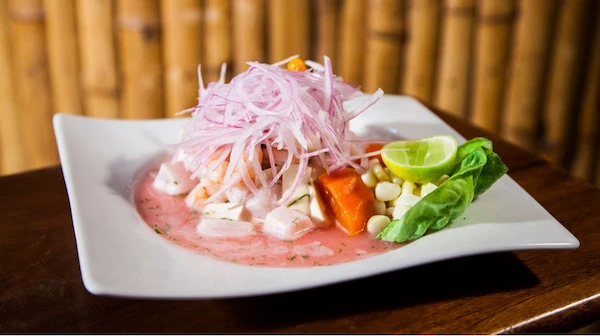
Ceviche is one of the most recognized traditional Peruvian dishes and a popular choice among travelers visiting Lima. It is prepared with fresh raw fish cut into small pieces and mixed with lime juice, red onion, ají limo, and salt. These ingredients give the fish its characteristic citrus flavor, while the chili pepper adds a touch of heat. The preparation is usually made shortly before serving to preserve the freshness and texture of the seafood.
Another important feature of ceviche is the way it is served. The fish is accompanied by ingredients that balance its acidity and add different textures to the dish. Sweet potato provides a slightly sweet flavor, boiled corn adds softness, and cancha (toasted corn) gives it a crunchy touch. Together, these ingredients create a combination of flavors that makes ceviche a distinctive part of Peru’s coastal cuisine.
The most common ingredients in a traditional ceviche include:
- Fresh white fish: Usually cut into bite-sized pieces.
- Lime juice: Provides the characteristic citrus flavor.
- Red onion: Adds freshness and a slightly sharp taste.
- Ají limo: A Peruvian chili pepper that gives the dish its distinctive heat.
- Sweet potato: Adds a natural sweetness that balances the acidity.
- Cancha and corn: Provide additional texture and flavor.
In Lima, ceviche is commonly enjoyed at lunchtime, when traditional cevicherías and seafood restaurants prepare it as one of their main specialties. It is often served with a small amount of leche de tigre, the citrus-based liquid left from the preparation, which concentrates the flavors of the fish, lime, onion, and chili. For travelers trying this dish for the first time, choosing a restaurant with good food-handling practices is important to enjoy fresh seafood safely.
Arroz con mariscos: A warm seafood preparation
Arroz con mariscos is one of the popular coastal preparations in Peruvian cuisine and a good option for travelers who prefer cooked seafood. This dish combines rice with ingredients such as shrimp, squid, mussels, and sometimes octopus or other shellfish, depending on the restaurant. The seafood is mixed with the rice during cooking, allowing its flavors to blend and creating a filling meal with a distinctive aroma.
Its preparation usually starts with a seasoning made from garlic, onion, tomato, ají amarillo, and other spices. These ingredients give the rice its characteristic color and rich taste. Some restaurants also add a little broth to bring the ingredients together and keep the rice moist. The result is a warm dish with different seafood textures in every serving.
Unlike ceviche, which is served cold and highlights the fresh taste of fish and citrus, arroz con mariscos is a cooked preparation with a more intense seasoning. It is commonly served in restaurants specializing in coastal Peruvian cuisine and may come with lime wedges or a small portion of salsa criolla.
It is especially worth trying if you enjoy:
- Variety of seafood: Combines shrimp, squid, mussels, and other marine ingredients.
- Seasoned rice: Uses garlic, onion, tomato, and Peruvian chili peppers for a rich flavor.
- A warm main course: Offers a filling alternative to cold seafood preparations.
- Different textures: Brings together tender seafood and soft, flavorful rice.
Where to explore Lima’s local food scene
Discovering traditional Peruvian food in Lima goes beyond visiting restaurants. Local markets offer a closer look at the ingredients used in everyday cooking, from fresh fish and seafood to native potatoes, different varieties of corn, fruits, and vegetables. Walking through these markets allows travelers to see how local products are selected, sold, and used in the preparation of many popular dishes.
One place worth visiting is Surquillo Market, where visitors can find a wide variety of fresh ingredients and observe the diversity of products found in Peruvian cuisine. The market is also a good opportunity to experience the daily activities of local vendors and learn more about the ingredients that form part of Lima’s food culture. In addition, the Miraflores area offers several options for exploring the city’s culinary scene, including restaurants, cafés, and markets. These places allow travelers to try different preparations while enjoying the atmosphere of one of Lima’s most visited neighborhoods.
If you are interested in reading: Things to do in Miraflores: The best experiences for travelers
Classic Peruvian main courses with cultural influences
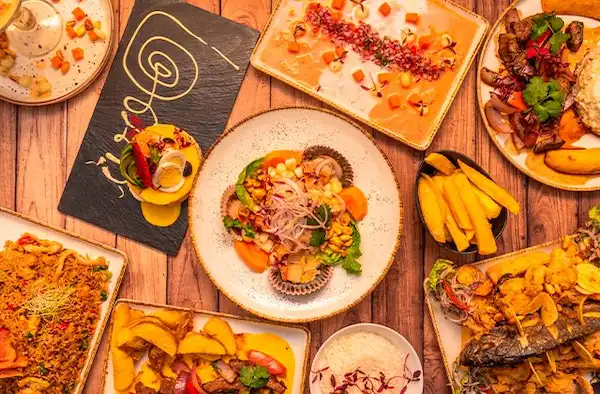
Peruvian gastronomy has been shaped by the combination of different cultures, ingredients, and cooking techniques. Over the years, influences from Indigenous, Spanish, African, Chinese, and other communities have contributed to the development of recipes that are now part of the country’s food identity. Many traditional Peruvian dishes reflect this cultural exchange through their ingredients, seasoning, and preparation methods.
In Lima, these influences can be seen in several popular main courses that combine local products with techniques brought from other parts of the world. Some preparations feature meat and vegetables cooked over high heat, while others use creamy sauces made with Peruvian chili peppers, milk, and cheese. Trying these dishes gives travelers an opportunity to experience different aspects of Peru’s culinary history through its everyday food.
Lomo saltado: A fusion of Peruvian and Chinese cuisine
Lomo saltado is one of the clearest examples of the influence of Chinese cooking on Peruvian gastronomy. It developed through the cultural exchange between Peruvian ingredients and Chinese stir-frying techniques, particularly those associated with Cantonese cuisine. This combination became an important part of chifa, the Peruvian culinary tradition that blends Chinese and local cooking.
The dish combines strips of beef with red onion, tomatoes, ají amarillo, soy sauce, and vinegar. These ingredients are quickly cooked over high heat, traditionally in a wok, allowing the meat to brown while the vegetables retain some of their texture. The seasoning creates a balance of savory, slightly acidic, and mildly spicy flavors.
Lomo saltado is usually served with white rice and French fries. Both accompaniments are important because they make the dish more filling and complement the juices produced during cooking. In some restaurants, the fries are mixed directly with the beef and vegetables, allowing them to absorb part of the sauce.
Some details that make lomo saltado special include:
- Beef: The main protein, usually cut into strips.
- Tomatoes and onions: Add freshness and natural juices.
- Ají amarillo: Provides a mild spicy flavor.
- Soy sauce and vinegar: Give the preparation its characteristic seasoning.
- French fries and rice: Complete the dish and make it more filling.
Lomo saltado is a good choice for travelers who enjoy meat-based meals and want to experience the fusion of different culinary traditions in Peru. It is widely available in restaurants throughout Lima, from traditional establishments to modern Peruvian restaurants.
Ají de gallina: Shredded chicken in a creamy sauce
Ají de gallina is a traditional Peruvian preparation made with shredded chicken covered in a thick sauce based on ají amarillo. Its texture is one of its most recognizable characteristics: creamy, smooth, and rich without necessarily being very spicy. The recipe combines ingredients such as bread, milk, cheese, and nuts, which give the sauce its consistency and distinctive flavor.
The preparation usually begins by cooking the chicken until it becomes tender enough to shred. Separately, the sauce is made by blending or cooking the yellow chili with other ingredients, including soaked bread, milk, and ground nuts. The shredded chicken is then added to the mixture and cooked until all the flavors come together. The result is a warm preparation with a mild spicy taste and a creamy consistency.
The traditional presentation usually includes:
- Shredded chicken covered with the yellow chili sauce.
- White rice served as an accompaniment.
- Boiled potatoes placed underneath or beside the chicken.
- Black olives and slices of hard-boiled egg for decoration.
Unlike some Peruvian preparations known for their strong spiciness, ají de gallina generally has a balanced flavor. The ají amarillo provides aroma and mild heat, while the milk, bread, and cheese soften its intensity. It is a good option for travelers who prefer creamy meals and want to try a dish commonly associated with traditional Peruvian home cooking.
Potato-based preparations in Peruvian cuisine
Potatoes have an important place in Peru’s culinary heritage. The country is recognized for its great diversity of native potatoes, which vary in size, color, texture, and flavor. This ingredient is used in many regional preparations, from simple boiled potatoes served with sauces to more elaborate dishes that combine different fillings and seasonings.
In Lima, potatoes are especially important in traditional starters. They can be served cold with citrus and chili seasoning or accompanied by creamy sauces made with cheese and ají amarillo. Two well-known examples are causa limeña and papa a la huancaína, both of which show how a common ingredient can be prepared in different ways
Causa limeña: A cold starter made with yellow potatoes
Causa limeña is a traditional dish from Lima prepared with mashed yellow potatoes seasoned with lime juice, ají amarillo, oil, and salt. The potato mixture is shaped into layers and filled with ingredients such as tuna, chicken, avocado, or seafood. Its combination of a soft potato base and different fillings creates a refreshing preparation that is commonly served cold.
To prepare it, the potatoes are first boiled until they become soft enough to mash. The seasoning is then incorporated while the potatoes are still manageable, creating a smooth mixture with a slightly tangy flavor and a characteristic yellow color. Once the base is ready, it is assembled in layers with the selected filling and sometimes decorated with additional ingredients.
There are several versions of causa limeña, depending on the filling used:
| Type of causa | Main filling |
|---|---|
| Causa de atún | Tuna and mayonnaise |
| Causa de pollo | Shredded chicken |
| Causa de palta | Avocado |
| Causa de mariscos | Mixed seafood |
Each version offers a different combination of flavors. Tuna and chicken are common choices for travelers who prefer familiar ingredients, while avocado and seafood provide alternatives with different textures. The potato base remains the main element in all these variations.
Causa limeña is commonly served as a starter in restaurants throughout Lima. Its layered presentation, variety of fillings, and refreshing texture make it an interesting option for travelers who want to try a traditional dish before ordering a main course.
Papa a la huancaína: Potatoes with a creamy chili sauce
Papa a la huancaína is a traditional Peruvian preparation made with boiled potatoes covered in a creamy sauce of fresh cheese, ají amarillo, milk, and crackers. It is usually served over lettuce and accompanied by black olives and slices of hard-boiled egg. The combination of these ingredients creates a dish with different textures and a balanced flavor, where the mild spiciness of the yellow chili contrasts with the creaminess of the sauce.
The sauce is the most distinctive part of this preparation. To make it, fresh cheese, ají amarillo, milk, and crackers are blended until they form a smooth and slightly thick mixture. The cheese provides a salty flavor, while the yellow chili gives the sauce its characteristic color and mild heat. The crackers help achieve the right consistency, allowing the sauce to cover the potatoes evenly.
Although its name refers to Huancayo, a city in the Peruvian Andes, papa a la huancaína is widely enjoyed throughout the country, including Lima. It is commonly served as a starter in restaurants and is also prepared in Peruvian homes for family meals and special occasions. For travelers, it is a simple but representative way to experience the use of potatoes, cheese, and native chili peppers in traditional Peruvian cuisine.
If you are interested in reading: San Pedro Market Cusco
Anticuchos: A popular Peruvian street food
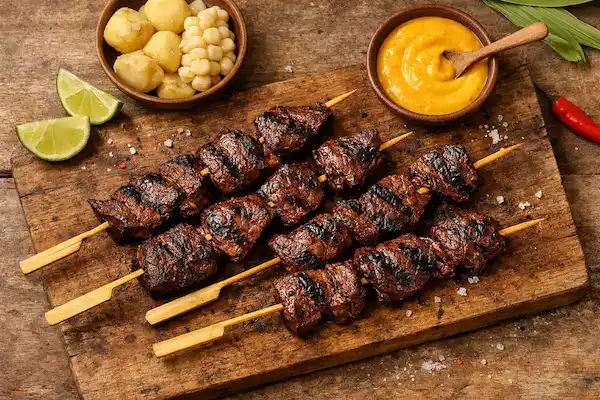
Anticuchos are one of the most popular traditional Peruvian street foods, especially in Lima, where they are commonly prepared at food stalls and neighborhood restaurants. They consist of small pieces of beef heart placed on skewers and grilled over charcoal. Before cooking, the meat is marinated with vinegar, garlic, cumin, and ají panca, a Peruvian chili pepper that gives it a reddish color and a distinctive flavor without making it excessively spicy.
The marinade is an essential part of the preparation because it seasons the meat and helps develop its characteristic taste. During grilling, the anticuchos acquire a smoky aroma and a slightly crisp exterior while remaining tender inside. They are usually served with boiled potatoes, corn, and a spicy sauce made with Peruvian chili peppers. In Lima, they are especially popular in the evening, when traditional anticucheras prepare them over open grills. For travelers, trying anticuchos is a good opportunity to experience a different side of Peruvian cuisine, beyond the seafood and rice-based dishes commonly associated with the capital.
There are a few characteristics that distinguish anticuchos from other grilled meat dishes:
- The traditional version uses beef heart.
- The meat is cut into small pieces and placed on skewers.
- The marinade includes vinegar, garlic, and Peruvian seasonings.
- Charcoal grilling gives the meat its smoky flavor.
- Potatoes and sauces are common accompaniments.
For travelers interested in authentic Peruvian street food, anticuchos offer a different experience from the seafood and rice-based preparations commonly associated with Lima. They are also a good way to experience the city’s evening food culture and try a recipe that has remained popular across generations.
Picarones: A traditional Peruvian dessert
Picarones are traditional Peruvian sweets made with a dough prepared from squash, sweet potato, flour, and yeast. These ingredients are mixed to create a soft dough that is shaped into rings and fried in hot oil until golden on the outside. Their texture is slightly crispy on the surface but soft inside, making them different from other fried desserts.
Once cooked, picarones are served hot with miel de chancaca, a sweet syrup prepared from unrefined cane sugar, water, cinnamon, and cloves. The syrup adds a rich sweetness that complements the flavor of the dough. In Lima, they are commonly sold at traditional food stalls and sweet shops, where vendors prepare and fry them in front of customers. Watching this process is also part of the experience, as the dough is shaped by hand before being placed in the hot oil and served with syrup. For travelers looking to try a traditional Peruvian dessert, picarones offer a combination of local ingredients, familiar spices, and a preparation that has been enjoyed for generations.
Which Peruvian dishes should you try first?
With so many traditional Peruvian dishes available in Lima, deciding what to try first depends on the flavors and ingredients you enjoy. If you have only a few days in the city, you can make the most of your food experience by choosing preparations from different categories, such as seafood, meat, potato-based starters, street food, and traditional desserts. This way, you can experience several aspects of Peruvian cuisine without having to try everything in a single meal.
To make your choice easier, consider the main ingredients, flavor, and type of preparation of each dish. Some options are refreshing and light, while others are more filling or have stronger seasonings. The following table compares the dishes covered in this article and can help you decide which ones to include in your food itinerary.
| Dish | Main ingredients | Flavor and texture | Type |
|---|---|---|---|
| Ceviche | Fish, lime, onion, chili | Fresh, citrusy, slightly spicy | Seafood |
| Arroz con mariscos | Rice, shrimp, squid, mussels | Savory and aromatic | Main course |
| Lomo saltado | Beef, onion, tomato, fries | Savory and slightly acidic | Main course |
| Ají de gallina | Chicken, yellow chili, milk, bread | Creamy and mildly spicy | Main course |
| Causa limeña | Yellow potatoes, lime, different fillings | Soft and slightly tangy | Starter |
| Papa a la huancaína | Potatoes, cheese, yellow chili | Creamy and mildly spicy | Starter |
| Anticuchos | Beef heart, garlic, ají panca | Smoky and seasoned | Street food |
| Picarones | Squash, sweet potato, chancaca syrup | Sweet and crispy outside | Dessert |
Your preferences can also help you narrow down the options, especially if you are trying Peruvian food for the first time. Here are a few recommendations based on the type of meal you enjoy:
- If you enjoy seafood: Start with ceviche or arroz con mariscos.
- If you prefer meat: Try lomo saltado or anticuchos.
- If you enjoy creamy preparations: Ají de gallina and papa a la huancaína are good options.
- If you want something lighter: Causa limeña is a traditional starter.
- If you have a sweet tooth: Finish your meal with picarones.
Make your visit to Lima a delicious experience
Trying traditional Peruvian dishes is an essential part of experiencing Lima beyond its main tourist attractions. Each preparation tells something about the country’s culinary history, from the seafood traditions influenced by the Pacific coast to the cultural fusion found in lomo saltado and the use of native ingredients in dishes such as causa limeña and picarones.
During your visit, take the opportunity to taste different preparations, explore local restaurants and try the food sold at traditional markets and street stalls. You can start with ceviche, enjoy a classic Peruvian main course, and finish with a traditional dessert. These flavors will give you a closer experience of Lima’s food culture and make your trip to Peru even more memorable.














[…] You might be interested in reading: Peruvian Dishes every traveler should try in Lima […]